 Premium Currency
Top 5 Most Traded Currencies in the World
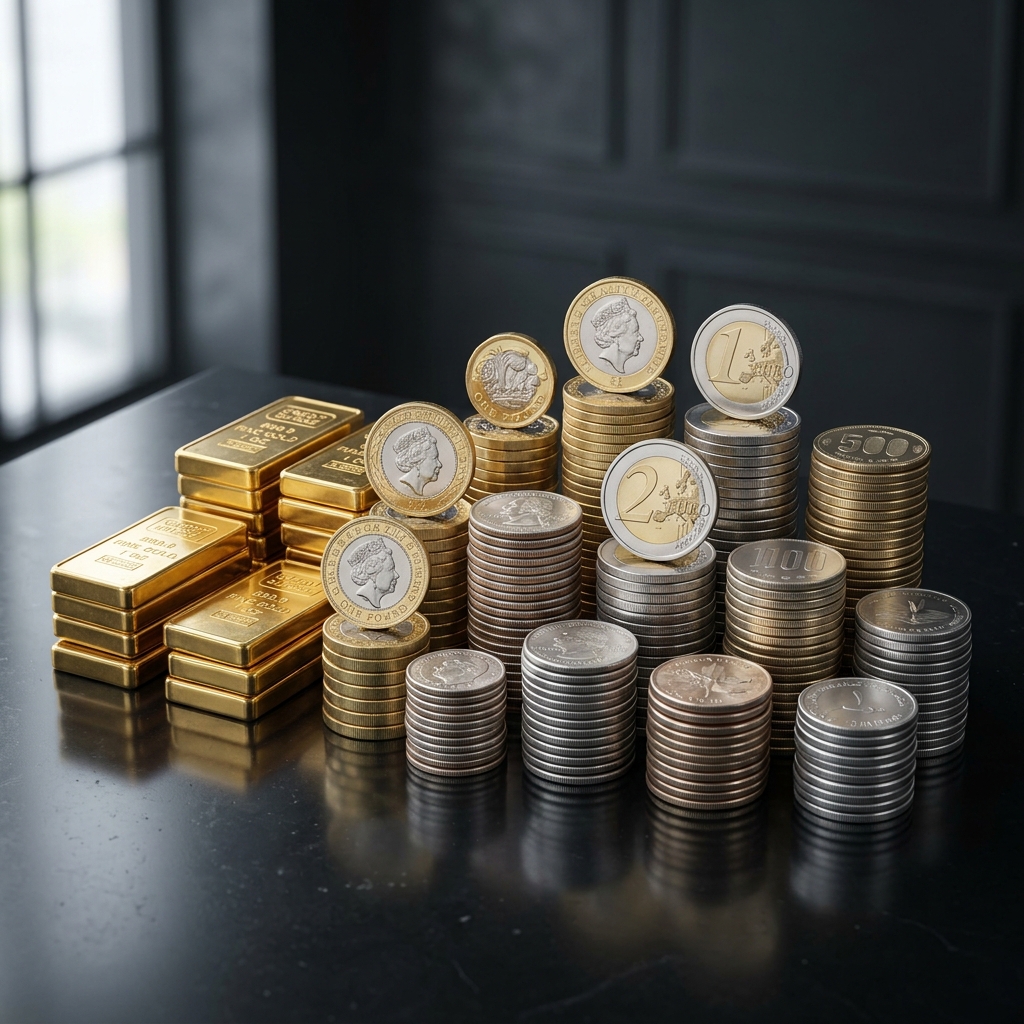
The global foreign exchange market is massive, with over $6 trillion traded every single day. While there are over 180 currencies worldwide, a select few dominate the vast majority of international trade and financial transactions. These "major" currencies are highly liquid and are used as pillars of the global economy.
1. US Dollar (USD)
Unsurprisingly, the US Dollar is the king of the forex world. It is the primary reserve currency for almost every central bank globally. Most commodities, including oil and gold, are priced in USD. It is involved in approximately 88% of all currency trades.
2. Euro (EUR)
The Euro is the official currency of 20 of the 27 member states of the European Union. It is the second most traded currency and the second largest reserve currency. Its value is heavily influenced by the economic and political developments within the Eurozone, particularly in its largest economies like Germany and France.
3. Japanese Yen (JPY)
The Yen is the most traded currency in Asia. It is often used as a "safe-haven" currency, meaning investors flock to it during times of market uncertainty. Because Japan has historically maintained very low interest rates, the Yen is also a popular choice for "carry trades," where investors borrow Yen to invest in higher-yielding currencies.
4. British Pound (GBP)
The British Pound Sterling is the oldest currency still in use. It is a major reserve currency and is heavily traded due to London's status as a global financial hub. The value of the Pound is often seen as a reflection of the UK economy's strength and its trade relations with the EU and the US.
5. Australian Dollar (AUD)
The Australian Dollar is often referred to as a "commodity currency" because Australia's economy is heavily dependent on the export of natural resources like iron ore, coal, and gold. Its value often correlates with global commodity prices and the economic performance of its major trading partners, particularly China.
Why Trade Volume Matters
For the average consumer, high trade volume (liquidity) means that these currencies are easier to exchange and typically have smaller "spreads"—the difference between the buy and sell price. When you use the Premium Currency Converter, these major pairs are updated with the highest frequency to ensure pinpoint accuracy.
Conclusion
Understanding which currencies lead the global market gives you a better perspective on international finance. Whether you're an investor, a business owner, or a traveler, keeping an eye on these big five is essential for navigating the global economy.