 Premium Currency
Understanding Exchange Rates: How They Are Calculated
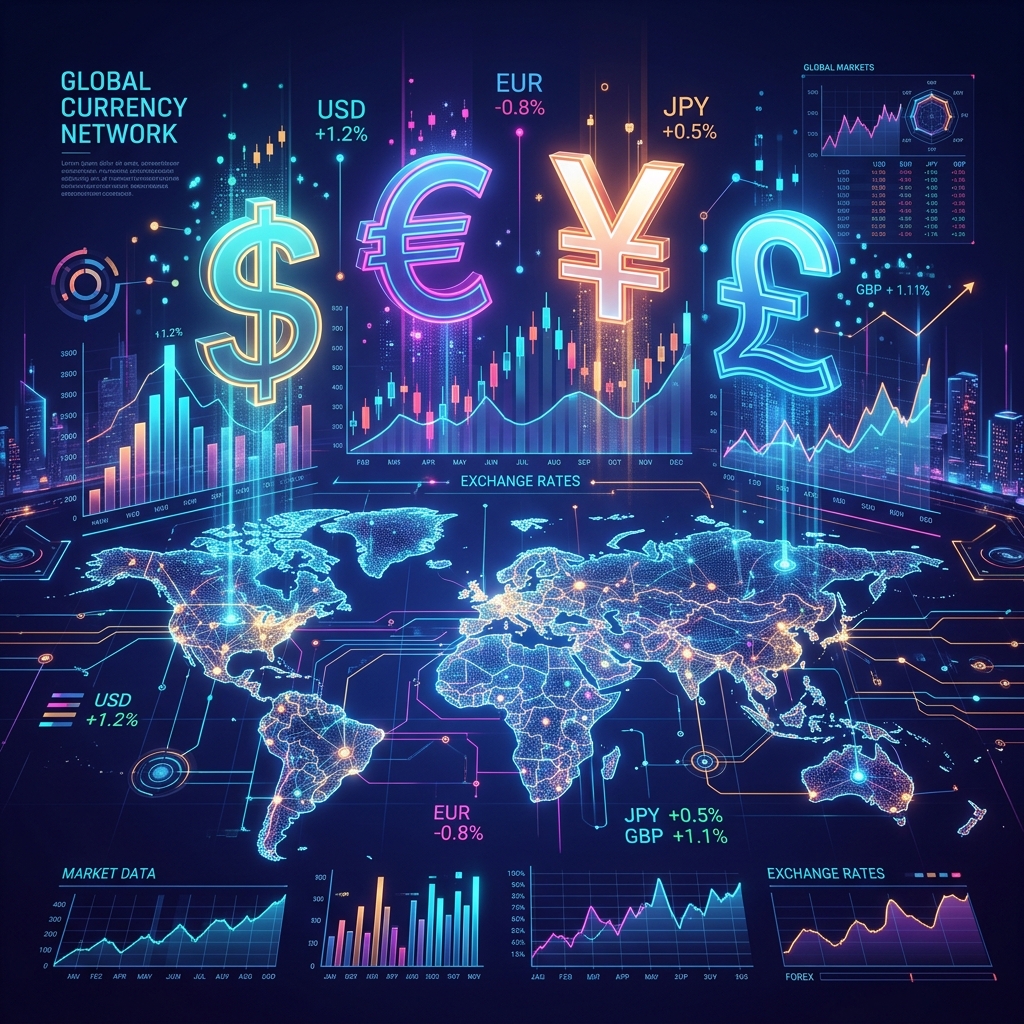
In today's interconnected global economy, currency exchange rates play a pivotal role in everything from international trade to your last-minute holiday shopping. But have you ever wondered what actually determines why one US Dollar is worth a certain amount of Euros or Japanese Yen? Understanding these mechanics is essential for anyone dealing with international finances.
What is an Exchange Rate?
At its simplest level, an exchange rate is the value of one nation's currency versus the currency of another nation or economic zone. For example, how many British Pounds does it take to buy one US Dollar? This rate is constantly fluctuating based on a complex web of global economic factors.
How Rates are Calculated
Most exchange rates are "floating" and are determined by the foreign exchange market (Forex). This is the largest, most liquid financial market in the world, where currencies are traded 24 hours a day. The price is driven by the fundamental economic principle of supply and demand.
If the demand for a particular currency increases—perhaps because investors want to buy that country's stocks or bonds—its value will rise. Conversely, if there's an oversupply of a currency or low demand, its value will decrease relative to others.
Key Factors Influencing Rates
- Interest Rates: Central banks (like the Federal Reserve) use interest rates to control inflation. Higher interest rates offer lenders in an economy a higher return relative to other countries. Therefore, higher interest rates attract foreign capital and cause the exchange rate to rise.
- Economic Performance: Countries with strong, stable economies are more attractive to investors. Metrics like GDP growth, unemployment rates, and manufacturing data all influence investor confidence and currency value.
- Inflation: Typically, a country with a consistently lower inflation rate exhibits a rising currency value, as its purchasing power increases relative to other currencies.
- Geopolitical Stability: Currencies are often seen as "safe havens" (like the Swiss Franc or US Dollar) during times of global political or economic turmoil. Political stability can bolster a currency, while instability can cause it to plummet.
The Role of Real-Time Data
Because these factors are constantly in motion, exchange rates change by the second. For consumers and business travelers, having access to real-time data is crucial. This is where tools like the Premium Currency Converter come in, providing you with the most up-to-date market rates directly in your browser.
Conclusion
While the world of foreign exchange can seem daunting, the core principles are rooted in global economics and investor sentiment. By staying informed about these factors, you can make smarter decisions when it comes to international spending and investments.